
Your new post is ready to publish. But your SEO tool shows an empty field labeled “Focus Keyword.” What should you type there? Many beginners also aren't sure why it matters.
In this post, I'll explain two simple things. You will learn simple steps to choose the right phrase for your post. You will also learn where to place it, plus a few basics that matter.
Table of Contents
- What Is a Focus Keyword?
- Focus Keyword vs Focus Keyphrase vs Primary Keyword
- How to Choose the Right Focus Keyword
- Focus Keyword Examples
- Choosing a Focus Keyword for One Post
- Where to Place Your Focus Keyword
- Is an SEO Plugin Required to Use a Focus Keyword?
- Common Focus Keyword Mistakes
- Frequently Asked Questions
- Final Thoughts
What Is a Focus Keyword?
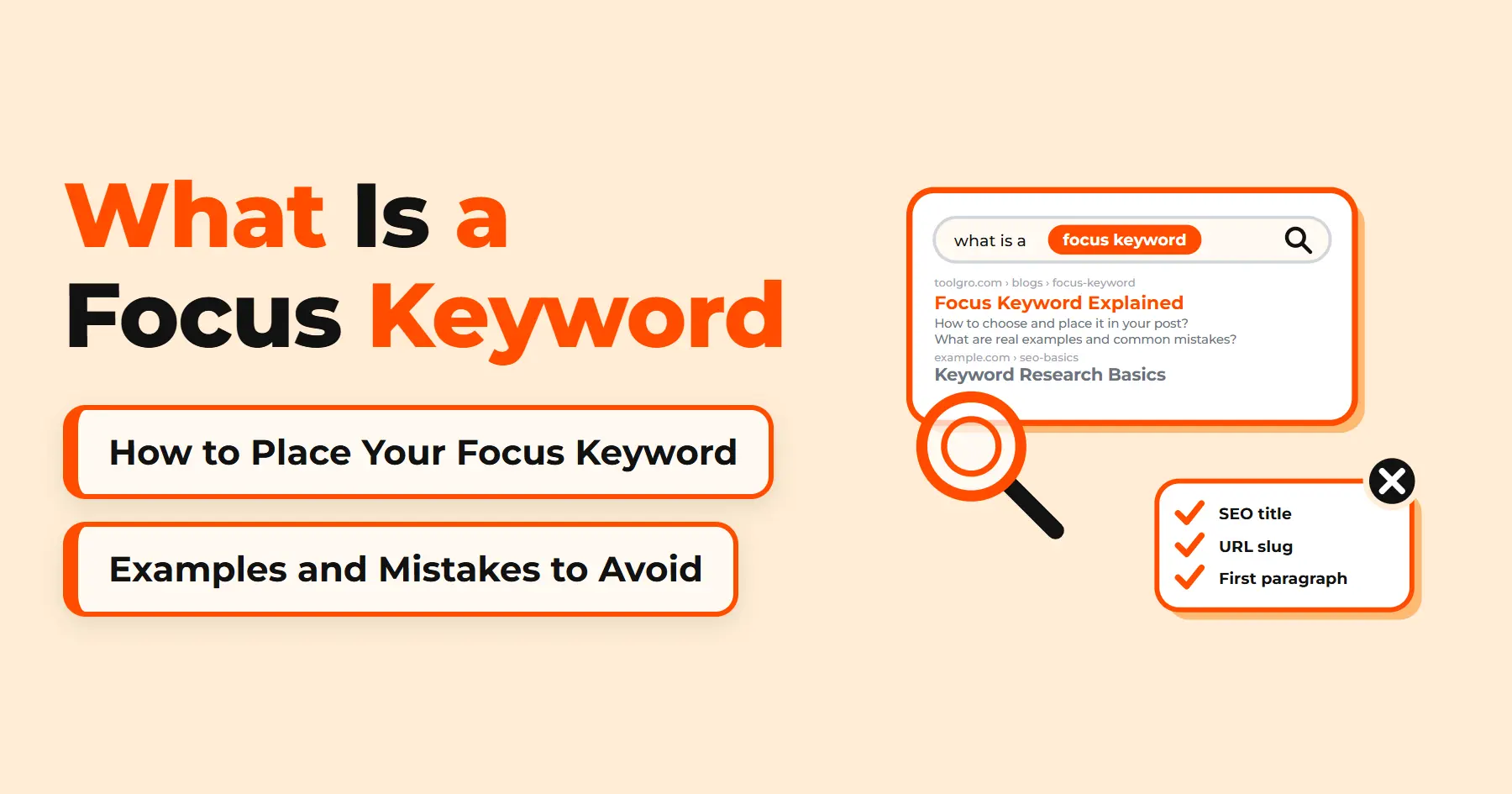
A focus keyword is the main phrase you select for a post. It names the topic you want your post to rank for. A reader types the phrase, and your page should answer it fully.
This phrase doesn't limit the number of searches your page can appear for. A good post can match many related queries. The phrase simply helps you define the post's main topic.
Focus Keyword vs Focus Keyphrase vs Primary Keyword
In everyday SEO, these three terms are often used interchangeably. Tools simply label the field differently.
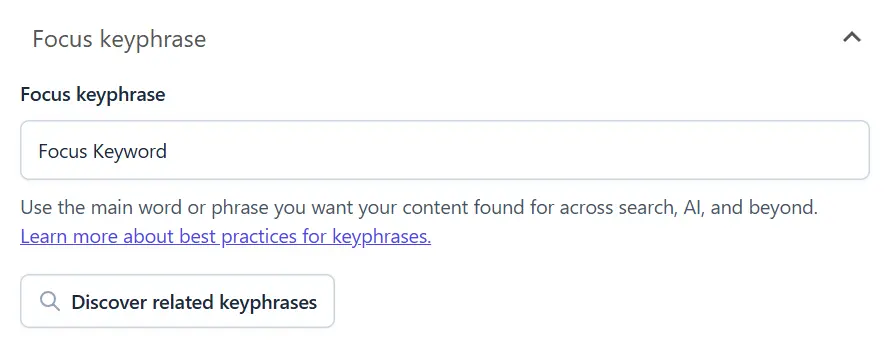
Yoast uses focus keyphrase. Rank Math uses focus keyword. Many writers say primary keyword or target keyword.
Secondary keywords are a different idea. They are related phrases that support the main one. For example, say your main keyword is "what is alt text." You can also use "alt text meaning" naturally.
How to Choose the Right Focus Keyword
Use these six checks in order. Each one narrows your options.
Start With the Main Topic
Name the single subject of your post. Avoid phrases that describe only one small section.
Example: A post on three ways to compress images. "How to compress images" fits the whole post. "Compress images in Paint" covers only one method.
Think Like a Searcher
Before choosing a phrase, see how real people word the search you're planning to write about. Suggestions can show popular searches related to your topic. The related questions below the results can help too.
Example: Typing "How to Write a Good Conclusion" may suggest "How to Write a Good Conclusion for an essay."
Match Search Intent
What question might someone type into Google? Some want to learn. Some want to compare options. Some want to buy.
Search the phrase, review the other results, and prepare your post accordingly. When most results are tools, readers want to use something, not read about it. Build a tool. Or choose a keyword that better matches your post. A mismatch makes ranking harder.
Example: Someone searching for "blog introduction examples" expects sample introductions to read, not a tool that generates them.
Check the Competition
Look at who already ranks for your phrase. If only huge brands appear, expect a hard climb. Choose a phrase where smaller sites also show up. Keep this check light. Search volume and tools deserve a separate guide.
Example: If major publishers and smaller blogs both rank for "blog introduction examples," smaller sites may have a chance to compete.
Prefer a Specific Focus Keyword
Broad phrases attract broad competition. More specific phrases can attract readers with a clearer idea of what they want.
Example: "SEO" is vague. "Focus keyword" tells the reader exactly what to expect. Adding a detail, like "for beginners," can sharpen a phrase further.
Run a Final Test
Ask yourself one last question. Can I add something useful that other results lack? If yes, you have a keeper.
Example: If existing results explain the topic but lack practical examples or step-by-step instructions, adding them could make your post more useful to readers.
Focus Keyword Examples
Below are the focus keywords I used on five of my own posts. Each card shows the topic, the keyword, and why it fits.
Post topic
Sample blog intros
Keyword
Why it fits
Readers want examples to learn from
Post topic
Choosing between two file types
Keyword
Why it fits
People commonly search for this comparison
Post topic
Picking an image type for a site
Keyword
Why it fits
The phrase states both the goal and the place
Post topic
Explaining image descriptions
Keyword
Why it fits
It answers a basic beginner question
Post topic
Comparing two capitalization styles
Keyword
Why it fits
Readers search it when they must pick one style
My approach to choosing focus keywords
My approach is simple. I mostly write about problems I've personally faced, so I start with topics I understand and can help readers with.
I also look at keyword difficulty (KD). Most SEO tools give every keyword a KD score. A low score means fewer strong pages to beat. If the difficulty is low, I'm more likely to consider a keyword, even if its search volume is small.
For the five posts above, I followed the same approach: I looked for keywords with lower difficulty that still matched the topic and allowed me to solve a reader's problem.
Worked Example: Choosing a Focus Keyword for One Post
Let's follow one post from start to finish. Here is the full decision path.
- Topic: You plan a post that shows samples of strong blog writing.
- Searcher words: Typing the topic into Google might suggest "blog writing examples" and "blog writing samples."
- Intent: The search results leaned more toward examples than samples.
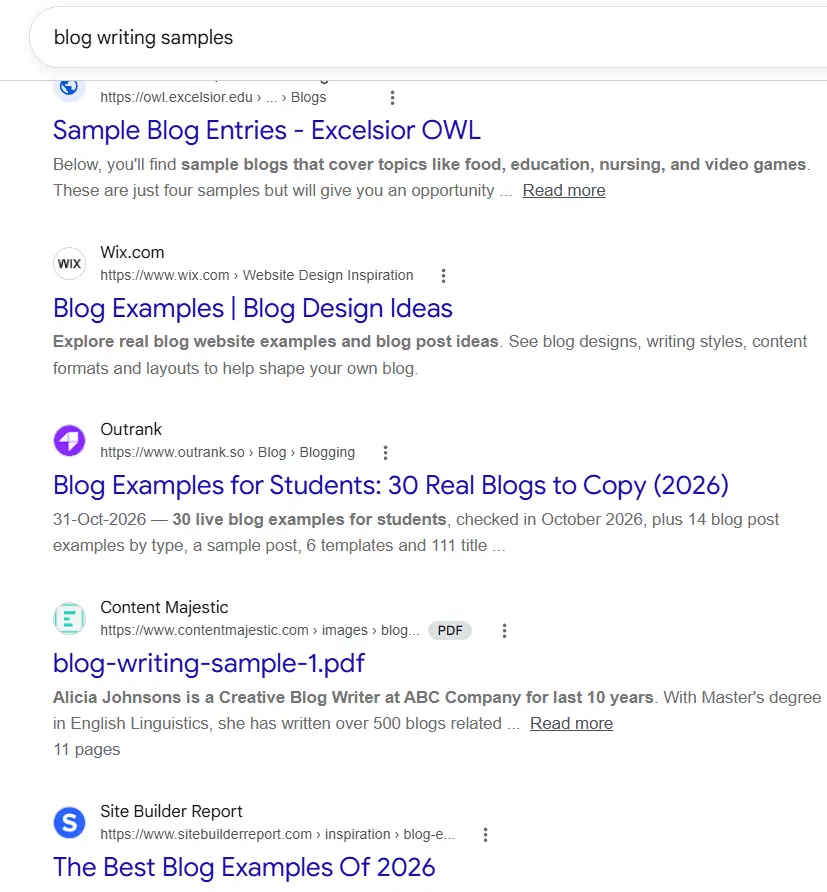
- Competition: Small blogs appear beside big publishers, that may indicate an opportunity for a newer site. Competition can still be tough.
- Decision: You choose "Blog Writing Examples." It is specific, natural, and matches intent. "Blog writing samples" becomes a secondary keyword.
Why I chose this keyword
My original plan was to create a post around "Blog Writing Samples" and include a few samples. After reviewing the search results, I chose "Blog Writing Examples" instead.
I then included examples of five blog post types and one template to make the post useful for readers looking for either examples or a starting point of their own.
You can follow the above steps for your posts. The time it takes depends on the topic.
Where to Place Your Focus Keyword
You've chosen your keyword. Now let's place it. We'll use "Blog Writing Examples" from the worked example above and keep every mention natural.
Search Result Spots
These spots shape how your page looks in search results.
- SEO title: Keep the original meaning intact when adding the keyword.
Example: "Blog Writing Examples: 5 Types With Samples."
- URL slug: Keep it short and descriptive.
Example: blog-writing-examples.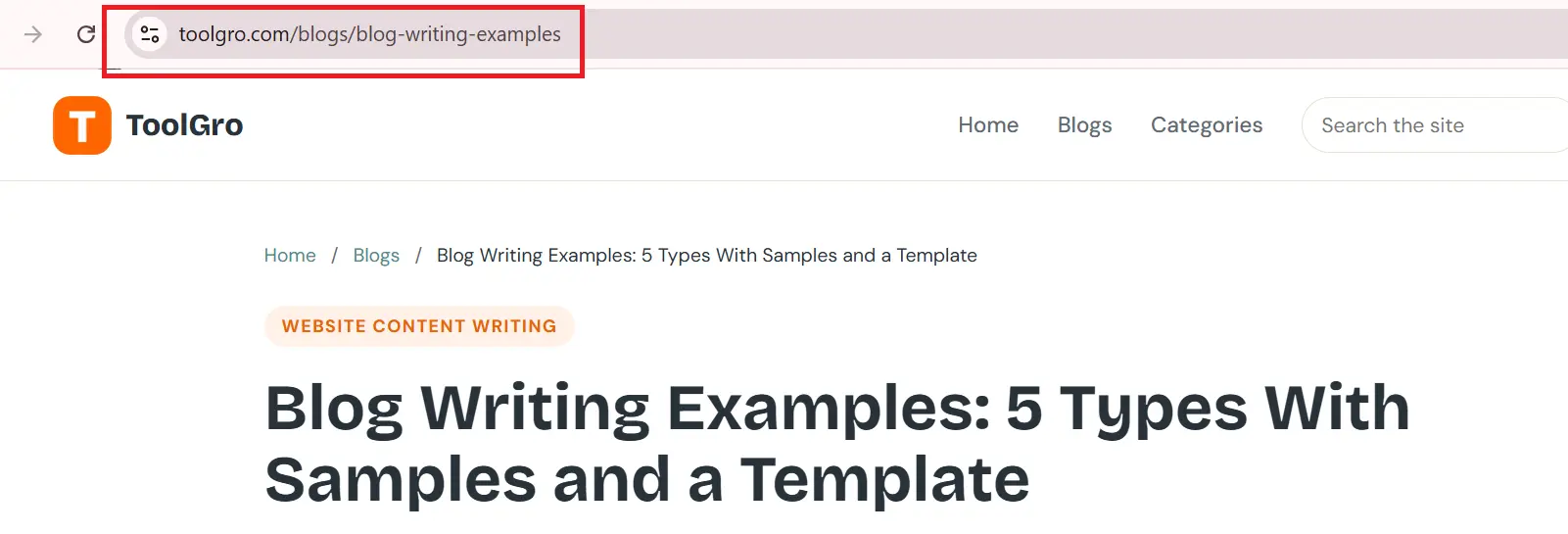
- Meta description: Write a clear summary that naturally includes the phrase when appropriate.
Example: "See five blog writing examples: how-to, listicle, before and after, comparison, and myth-busting. Includes short samples and a template to plan your post."
On-Page Spots
These spots help readers confirm they landed on the right page.
- H1: Write a clear heading that describes the post.
Example: "Blog Writing Examples: 5 Types With Samples and a Template"
- Introduction: Mention it within the first 100 words.
Example (for a different post): "So, what is alt text, and why does it matter?"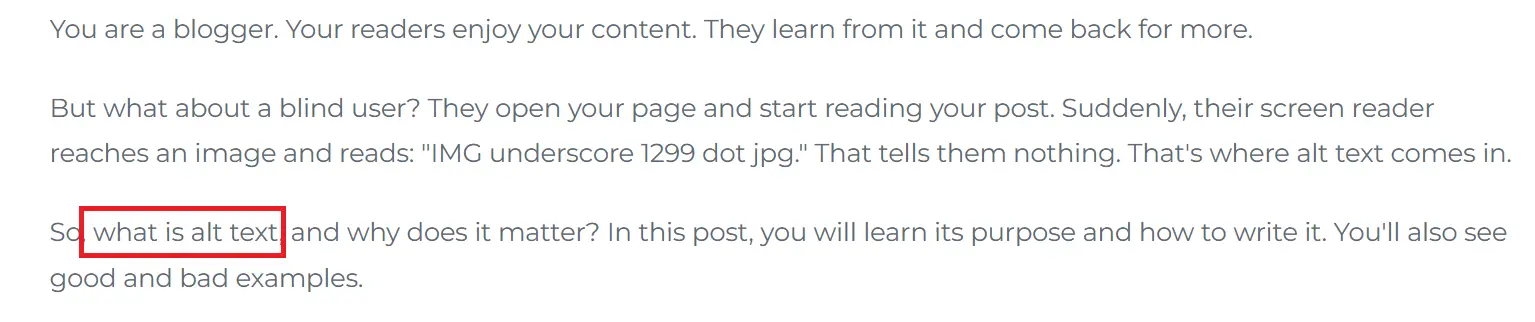
- Subheadings: Use it in a subheading if it fits naturally. Don't force it into multiple headings.
Example: "What Makes These Blog Writing Examples Work?" - Body text: Mention it a few times, plus close variations.
- Image alt text: Add it only when it describes the image.
Is an SEO Plugin Required to Use a Focus Keyword?
No, it is not required. Plugins assign a score based on their own criteria. The score is writing feedback, not a Google ranking factor.
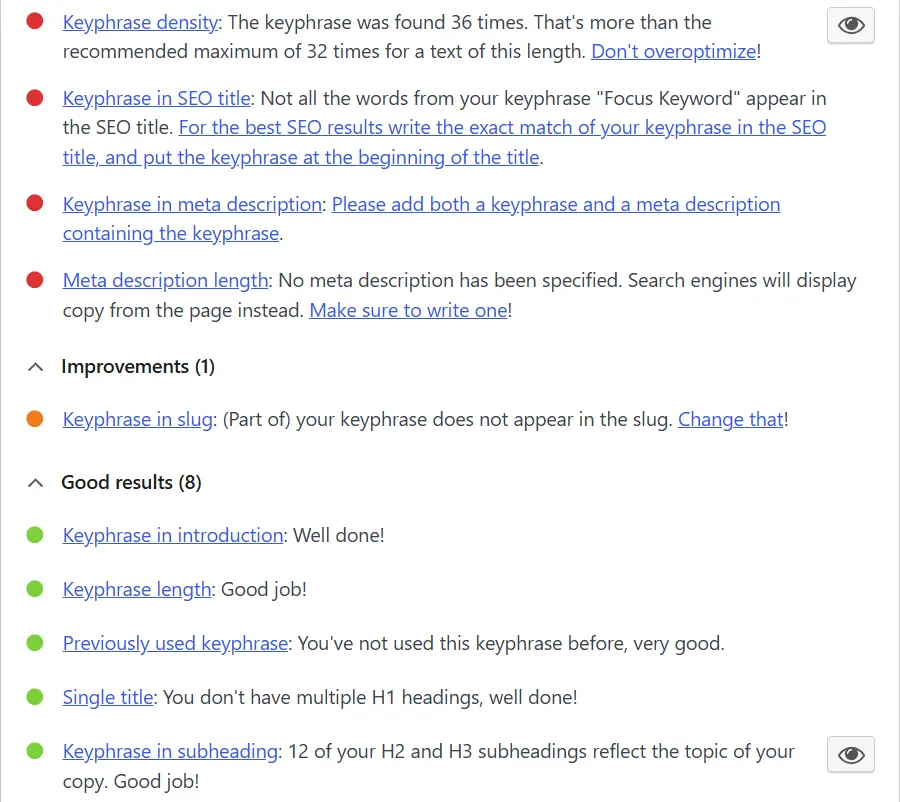
Google can see the phrase if it appears in your page content. But it does not receive the plugin field as a special ranking instruction.
A plugin can still help beginners spot missing placements. On a custom site, use the placement list above by hand. The on-page work stays the same.
Common Focus Keyword Mistakes
Two common mistakes can cause problems.
- Stuffing the phrase. Let it appear naturally where relevant instead of repeating it unnecessarily.
- Using one keyword for several posts. Give each post its own main keyword. Consider merging posts when their content substantially overlaps and they target the same search intent.
For example, imagine you have one post about "What Is Internal Linking" and another about "How to Internally Link Your Posts." These answer two different questions, so each should have its own target keyphrase.
Using the same keyphrase for both could make it harder for search engines to understand which page best matches a particular search.
Frequently Asked Questions About Focus Keywords
Can a focus keyword be more than one word?
Yes. A focus keyword can be one word or several words. Many are short phrases that describe the post's main topic.
Can I change a focus keyword later?
Yes. Update the title and headings to match the new phrase. Keep the URL the same if the post already gets traffic.
Does a focus keyword guarantee higher rankings?
No. It sets a clear target. Rankings also depend on content quality, competition, and site trust.
Final Thoughts
Research several focus keyword options before you begin writing. Do this groundwork for each post, and every new post starts with a clear target.
Also pick one or two backup keywords for each post. If your first choice turns out weak, switch to a backup.